


Scalable Personalization Systems for Modern Ecommerce

As ecommerce brands mature, personalization shifts from being a creative tactic to an architectural requirement. What works at an early stage—manual segmentation, static rules, and campaign-based logic—quickly collapses under the weight of scale.
Customers do not behave in predictable, linear paths. They browse, pause, return, compare, abandon, and re-engage across multiple sessions and devices. Systems that assume fixed journeys or rigid segments struggle to interpret these patterns meaningfully.
This is why leading brands are moving away from tactical personalization and toward system-level design. Instead of asking which message to send, they focus on building infrastructure that can interpret behavior continuously and respond in real time. Platforms like Klaviyo have become central to this shift.
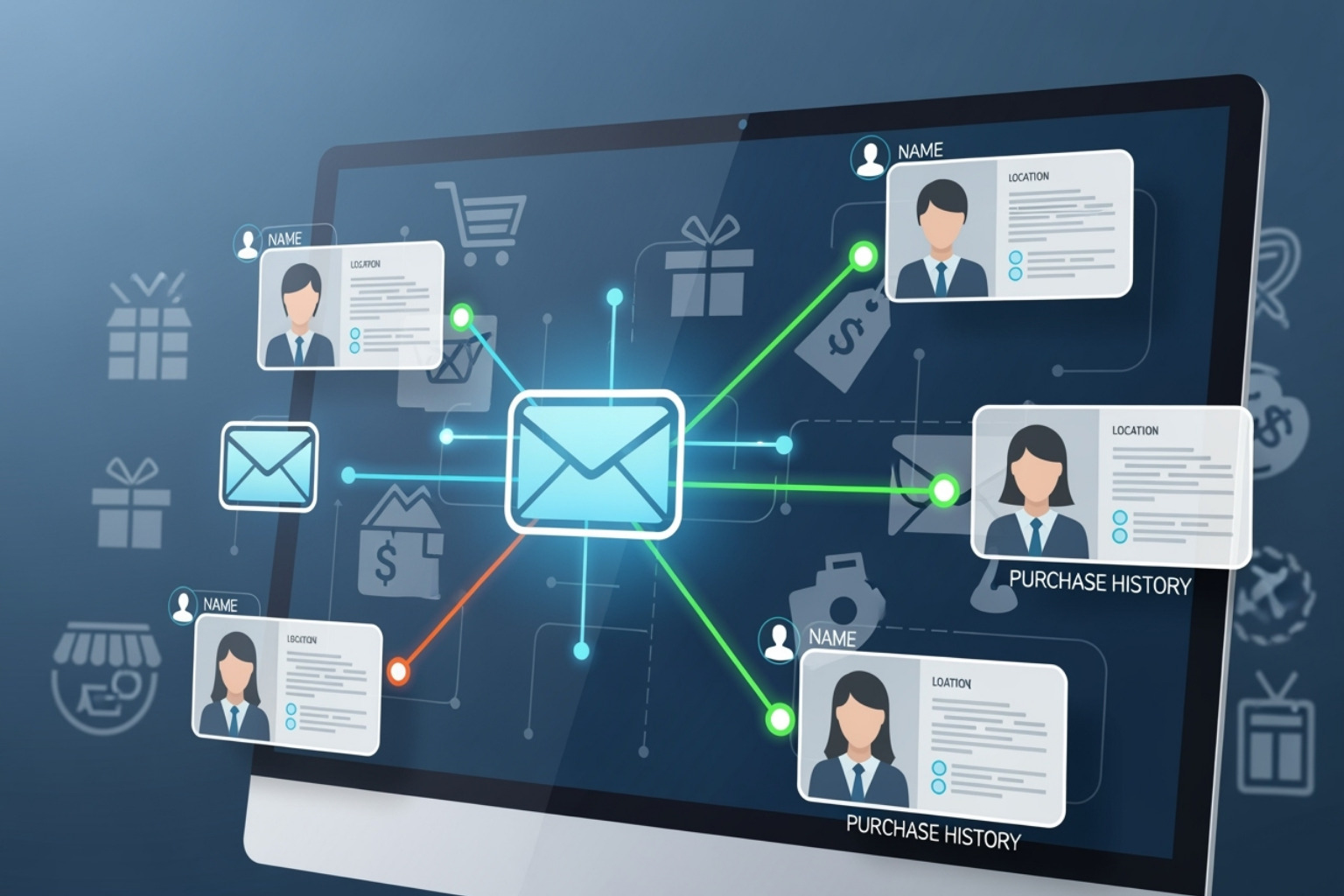
Personalization as Infrastructure, Not Execution
Personalization is often framed as a messaging problem. In practice, it is a systems problem. Messaging is merely the output of deeper decisions about how data flows, how signals are interpreted, and how actions are triggered.
Brands that rely on campaign-level personalization tend to optimize individual sends while ignoring systemic limitations. As customer bases grow, these limitations compound. Teams spend more time maintaining logic than improving relevance.
A system-level approach reframes personalization around three foundational questions:
- What signals matter at each stage of the customer lifecycle?
- How are those signals captured, unified, and evaluated?
- How does the system decide when and how to respond?
When these questions are addressed structurally, personalization becomes scalable by design rather than by effort.
Why Static Segmentation Fails at Scale
Static segments assume that customers can be cleanly categorized. In reality, behavior is fluid. A customer may exhibit high purchase intent one day and complete disengagement the next.
Static systems struggle because they rely on historical snapshots rather than live signals. They often require manual updates, complex rule sets, and constant oversight to remain relevant.
| Static Segmentation | Behavior-Driven Systems |
|---|---|
| Based on fixed attributes | Based on real-time actions |
| Requires manual maintenance | Adapts automatically |
| Breaks as complexity grows | Scales with customer volume |
As scale increases, static systems introduce friction. Teams hesitate to change logic for fear of unintended consequences, leading to bloated, fragile architectures.
Behavior as the Primary Input Layer
Modern personalization systems treat behavior as the most reliable source of truth. Actions reveal intent more accurately than declared attributes.
Behavioral inputs include browsing depth, repeat product views, purchase cadence, engagement frequency, and interaction timing. These signals are transient and context-dependent, which makes them unsuitable for static classification.
Instead, effective systems continuously ingest behavioral data and update customer state dynamically. Messaging decisions are made based on what the customer is doing now, not what they did weeks ago.
This approach enables responsiveness without constant human intervention.
Unifying Data Into a Single Customer View
Behavioral signals lose value when fragmented across tools. Disconnected data sources prevent systems from forming a coherent understanding of customer context.
Unified customer profiles solve this problem by consolidating transactional data, engagement history, and behavioral signals into a single, continuously updated record.
Platforms like Klaviyo are designed to centralize these inputs, allowing personalization logic to operate on a holistic view rather than isolated events.
When data is unified, systems can:
- Detect intent shifts earlier
- Reduce conflicting messages
- Coordinate responses across channels
This alignment is essential for maintaining relevance at scale.
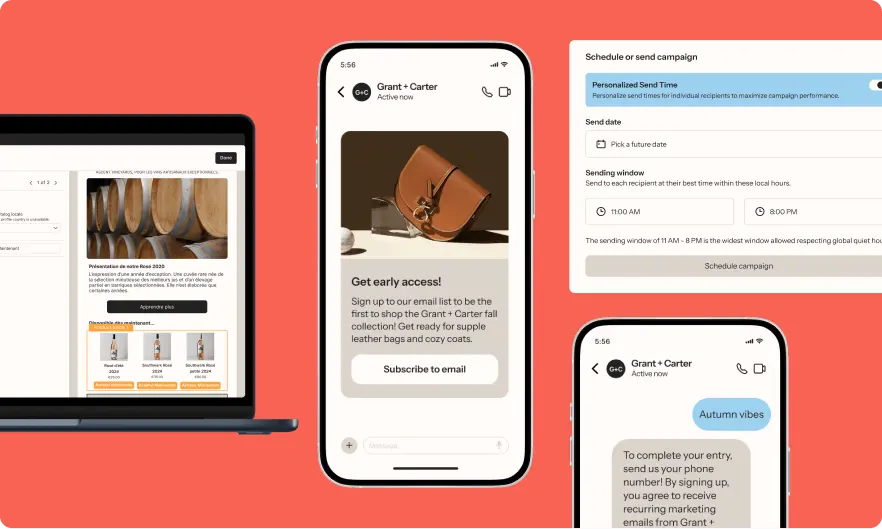
Email and SMS as System Outputs, Not Channels
Email and SMS are often discussed as standalone channels. In a systems context, they function as output mechanisms for personalization logic.
Email provides narrative space. It supports education, reinforcement, and longer-form value delivery. SMS excels at immediacy, reaching customers at moments where timing is critical.
When triggered by behavior rather than schedules, these channels amplify relevance rather than volume.
- Email supports context and continuity
- SMS supports urgency and precision
- Together, they reinforce lifecycle progression
The effectiveness of these channels depends less on copy and more on system timing.
Lifecycle Automation Without Rigidity
Automation is often misunderstood as rigid predefinition. In reality, well-designed automation increases flexibility by removing repetitive decision-making.
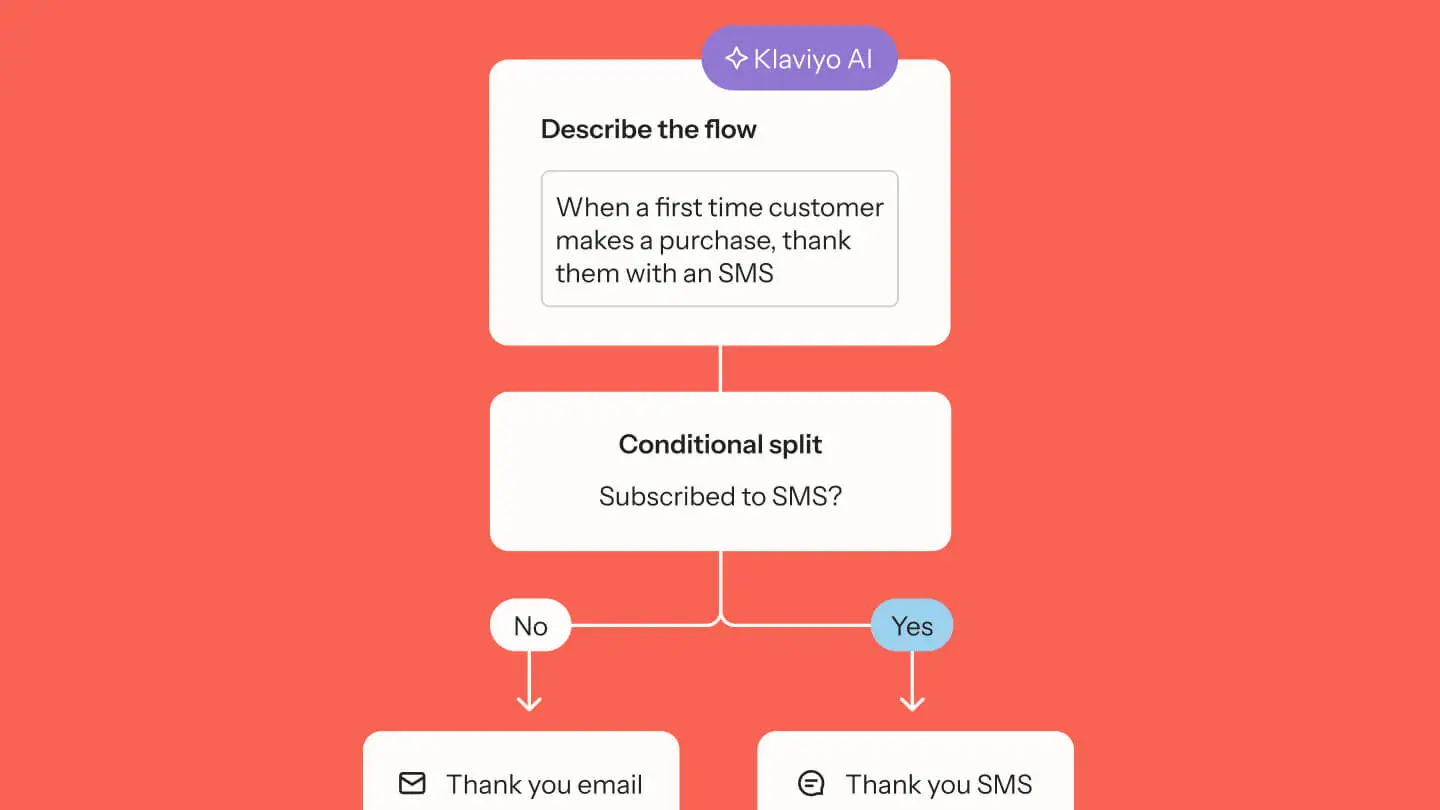
Lifecycle automation focuses on transitions rather than campaigns. Systems monitor how customers move between states—first-time buyer, repeat customer, dormant user—and respond accordingly.
Key lifecycle moments include:
- Post-purchase reassurance
- Second-purchase encouragement
- Early signs of disengagement
- Loyalty reinforcement
Automation platforms allow these flows to evolve over time. Performance data informs adjustments, ensuring systems remain adaptive rather than static.
AI as a Decision Support Layer
As data volume increases, manual interpretation becomes impractical. AI augments human decision-making by identifying patterns and prioritizing opportunities.
Rather than replacing strategy, AI acts as a filtering and recommendation layer. It highlights which customers are most likely to convert, churn, or re-engage.
This allows teams to focus on system improvement rather than constant execution.
AI-driven insights help personalization systems:
- Prioritize high-impact segments dynamically
- Optimize timing at the individual level
- Surface risks before performance declines
Maintaining Strategic Control in Automated Systems
One concern with automation is loss of control. In practice, system-level personalization enhances oversight by making logic explicit and measurable.
Instead of managing dozens of individual campaigns, teams manage rules, thresholds, and signals. This shifts control from execution to architecture.
Clear system design enables:
- Predictable behavior across channels
- Consistent customer experience
- Faster iteration without disruption
Control is preserved through clarity, not manual effort.
Why Relevance Outperforms Reach
In saturated markets, reach is increasingly expensive. Relevance, by contrast, compounds.
Messages that align with intent require fewer sends, fewer incentives, and less noise. Over time, relevance builds trust, which improves engagement efficiency.
Systems designed for relevance reduce dependency on volume-driven tactics and support sustainable growth.
Closing Perspective: Systems Create Advantage
Personalization success is not determined by creativity alone. It is determined by system design.
Brands that invest in behavioral infrastructure, unified data, and adaptive automation gain a durable advantage. They respond faster, waste less effort, and remain relevant as complexity increases.
Platforms like Klaviyo support this evolution by enabling personalization as a system rather than a feature.
In modern ecommerce, relevance scales only when systems are built to support it.